

Hot flashes have a way of showing up at the worst possible moment. One minute, you are comfortably working, sleeping, or talking with friends. The next, heat spreads across your chest and face, your skin starts sweating, and you are searching for the nearest fan.
While food cannot “cure” hot flashes, certain eating habits may help make them less frequent or easier to manage. The most promising research involves whole soy foods and diets built around vegetables, fruit, legumes, and minimally processed foods. In one randomized trial, women following a low-fat plant-based diet that included half a cup of cooked soybeans each day experienced a greater reduction in moderate-to-severe hot flashes than women who made no dietary changes. However, it was a relatively small study, so the results should be viewed as encouraging rather than definitive.
It is also important to be realistic. The Menopause Society notes that the evidence for dietary changes and soy remains limited, and results vary from one woman to another. Think of the following foods as parts of a supportive eating pattern—not guaranteed treatments.
1. Whole Soybeans
Whole soybeans provide isoflavones, plant compounds that have a structure similar to estrogen. Because estrogen levels fluctuate and eventually decline during menopause, researchers have studied whether isoflavones can influence hot flashes.
The strongest food-based trial used half a cup of cooked soybeans daily alongside a low-fat vegan diet. You can add cooked soybeans to salads, soups, grain bowls, or vegetable dishes.
2. Edamame
Edamame is simply young soybeans harvested before they fully mature. It provides the same general family of isoflavones found in other soy foods, along with protein and fiber.
Try it steamed as a snack, tossed into a salad, or mixed with brown rice and vegetables. Choose plain or lightly salted versions rather than heavily seasoned products if salty foods leave you feeling thirsty or uncomfortable.
3. Tofu
Tofu is an easy way to eat soy without making a dramatic change to your usual meals. It can be scrambled with vegetables, blended into smoothies, baked until crisp, or added to soup.
Soy protein and soy isoflavones may produce a small improvement in the frequency or severity of hot flashes, although studies have not been completely consistent.
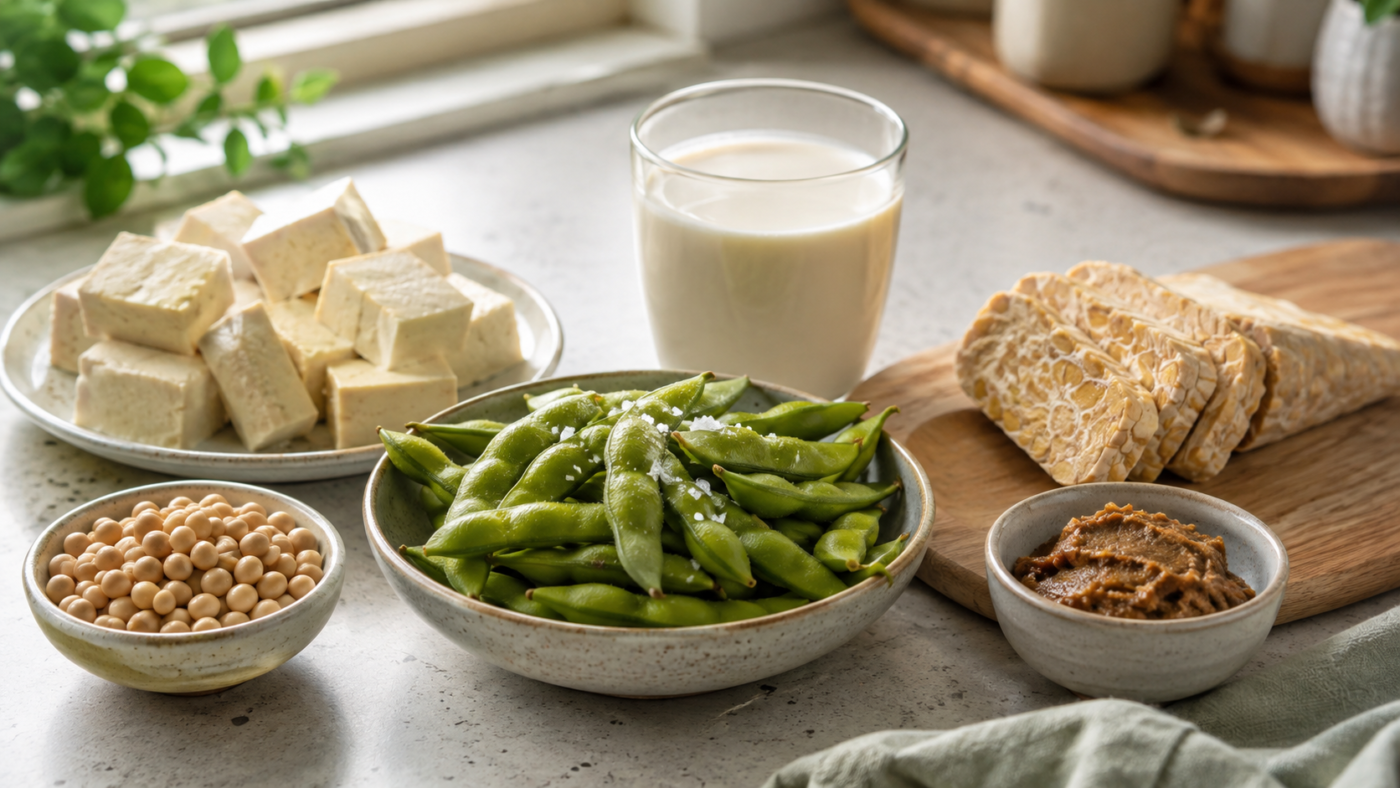
4. Tempeh
Tempeh is made from fermented soybeans and has a firmer, nuttier texture than tofu. Because it holds its shape well, it works in stir-fries, wraps, salads, and sandwiches.
Fermentation does not turn tempeh into a proven menopause treatment, but it offers another practical way to include whole soy foods in your diet without depending on concentrated supplements.
5. Unsweetened Soy Milk
Soy milk can replace dairy milk in oatmeal, smoothies, sauces, and coffee. Look for an unsweetened product fortified with calcium and vitamin D, since bone health becomes increasingly important during and after menopause.
In an observational study, soy milk intake was associated with fewer vasomotor symptoms, although that type of study cannot prove that soy milk caused the improvement.
6. Miso
Miso is a fermented soybean paste commonly used in Japanese cooking. A spoonful can add a savory flavor to soups, marinades, dressings, and roasted vegetables.
It contains soy compounds, but it can also be high in sodium. A small serving is usually enough to add plenty of flavor, so there is no need to use large amounts.
7. Ground Flaxseed
Flaxseed contains lignans, another type of phytoestrogen. It also provides fiber and alpha-linolenic acid, a plant-based omega-3 fat.
Research specifically testing flaxseed for hot flashes has been inconsistent, and some trials have found no meaningful advantage over a placebo. Still, ground flaxseed is a nutritious addition to oatmeal, yogurt, smoothies, and whole-grain baking.

8. Chickpeas
Chickpeas contain small amounts of phytoestrogens and are rich in fiber and plant protein. They can also make meals more filling, which may help with healthy weight management.
That matters because a higher body weight has been associated with more troublesome hot flashes, while weight loss may provide relief for some women. Try chickpeas in hummus, salads, curries, or roasted snacks.
9. Lentils
Lentils are affordable, quick to cook, and easy to add to soups, stews, pasta sauces, and salads. Like chickpeas, they provide protein and fiber without a large amount of saturated fat.
Legumes fit naturally into the plant-forward and Mediterranean-style eating patterns that have been associated with fewer menopausal symptoms.

10. Black Beans
Black beans are another useful plant protein. They can replace some of the processed or high-fat meats in tacos, chili, rice dishes, and casseroles.
Do not expect one bowl of beans to stop a hot flash. Their value comes from helping you build a higher-fiber, less heavily processed diet that supports weight, blood sugar, heart health, and overall menopause health.
11. Oats
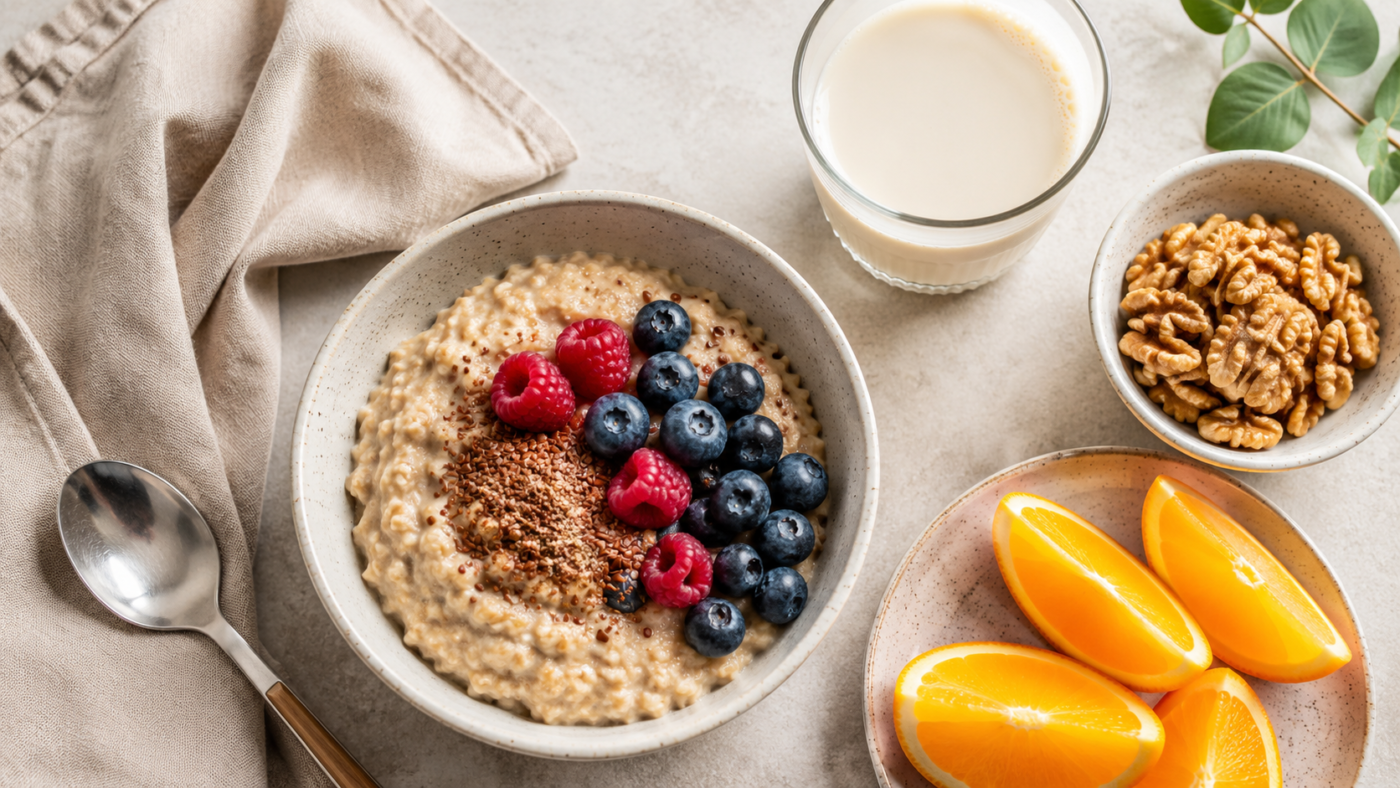
Oats make a simple breakfast base for soy milk, berries, ground flaxseed, or walnuts. Their soluble fiber can help make breakfast satisfying and support healthy cholesterol levels.
There is no strong evidence that oats directly prevent hot flashes. However, whole grains are a central part of the balanced, high-fiber dietary patterns recommended during perimenopause and menopause.
12. Barley
Barley has a pleasantly chewy texture and works well in soups, salads, and grain bowls. Like oats, it contains soluble fiber and can replace refined grains in many meals.
Switching from refined carbohydrates to intact whole grains may also help you avoid meals dominated by sugar and highly processed foods—patterns that have been associated with a greater likelihood of vasomotor symptoms.
13. Brown Rice
Brown rice is not a direct treatment, but it provides a useful foundation for a hot-flash-friendly meal. Pair it with tofu or beans, plenty of vegetables, and a light dressing.
Keeping meals simple and minimally processed can also make it easier to identify your personal triggers. You may discover that the spicy sauce, rather than the rice or vegetables, is what causes trouble.
14. Berries
Strawberries, blueberries, raspberries, and blackberries provide fiber and can satisfy a craving for something sweet without relying on desserts high in added sugar.
A large prospective study found that fruit-rich eating patterns were associated with a lower likelihood of hot flashes and night sweats. That does not prove that berries alone are responsible, but they fit comfortably into the pattern.
15. Apples
Apples are portable, widely available, and easy to combine with nuts or unsweetened nut butter for a satisfying snack.
Eating whole fruit rather than drinking juice gives you more fiber and usually takes longer to consume. That may help you feel fuller and support gradual, sustainable weight management rather than extreme dieting.
16. Oranges
Oranges and other citrus fruits are refreshing, water-rich choices that can be especially appealing when you feel overheated. A chilled orange will not prevent the hormonal process behind a hot flash, but cool food may feel more comfortable than a steaming snack or drink.
Hot beverages themselves can be a trigger for some women.
17. Watermelon
Watermelon provides fluid and can help you stay hydrated after sweating. Serve it chilled as a snack or dessert during warmer weather.
Hydration does not necessarily reduce how often hot flashes occur, but it can replace alcoholic, caffeinated, or very hot beverages that may trigger symptoms in some people.
18. Leafy Green Vegetables
Spinach, kale, bok choy, and collard greens contribute fiber and several important vitamins and minerals. Some greens also provide calcium, which supports bone health as estrogen levels decline.
Vegetable consumption has been associated with better overall menopause symptom scores, although more research is needed to determine its effect on hot flashes specifically.
19. Broccoli
Broccoli is filling without being heavy and works in stir-fries, soups, salads, and roasted vegetable dishes. It can help you increase the volume of a meal while reducing your reliance on fried or highly processed sides.
That kind of substitution may be more useful than searching for a single “miracle” ingredient.
20. Walnuts
Walnuts provide unsaturated fats, plant protein, and a small amount of plant-based omega-3. They are useful for adding texture to oatmeal, fruit, and salads.
Omega-3 supplements have not consistently reduced hot flashes in clinical trials, so walnuts should not be presented as a direct remedy. They are included because they support a Mediterranean-style eating pattern linked with better overall menopausal health.
21. Extra-Virgin Olive Oil
Extra-virgin olive oil can replace butter, shortening, or heavy creamy dressings in many meals. Use it with vegetables, beans, whole grains, and salads rather than treating it as a supplement.
Mediterranean-style dietary patterns, which commonly include olive oil, fruit, vegetables, legumes, nuts, and whole grains, have been associated with fewer or milder menopausal symptoms. These findings are promising, but much of the evidence is observational.
Foods and Drinks That May Make Hot Flashes Worse
What you reduce may matter as much as what you add. Alcohol, caffeine, spicy dishes, and very hot drinks are commonly reported triggers. You do not necessarily need to eliminate all of them forever. Instead, keep a symptom diary for two or three weeks and look for patterns.
Write down what you ate, when a hot flash occurred, how intense it felt, and what else was happening at the time. Stress, room temperature, poor sleep, and smoking can also affect symptoms.
The Bottom Line
You do not need to eat all 21 foods or completely rebuild your diet overnight. Start with one manageable change: replace dairy milk with unsweetened soy milk, add tofu to dinner twice a week, put berries and flaxseed on your oatmeal, or build one bean-based meal.
Give the change time, track your symptoms, and pay attention to how your body responds. If hot flashes are frequent, severe, or affecting your sleep and daily life, talk with a qualified healthcare professional. Diet can support your health, but hormone therapy remains the most effective treatment for hot flashes, and several nonhormonal treatments are also available.
